
Section 1: The Economic Transition to Automated Cold-Side Racking
Growing a brewery past taproom size means a real change in how your packaging floor works.
When your weekly wholesale orders start to outpace your manual keg team, you hit a bottleneck.
Investing in a commercial automatic keg filler is the logical next step for a business that wants to protect its margins.
A single automated filling head removes manual volume errors, cuts beer loss from foam, and keeps oxygen pickup very low.
It also lets your team package big volumes in a fraction of the time, cutting manual labor hours.
Finding the best layout means matching your floor space against your distribution goals.
Whether you run a growing regional brand or an industrial line, your keg equipment sets your daily costs.
This guide breaks down the financial returns, engineering features, and quality controls of automated keg packaging.
Section 2: Counter-Pressure Fluid Dynamics and Dissolved Oxygen Protection
Keeping your beer fresh over long wholesale trips means full control of oxygen during the final fill.
Oxygen is the enemy of packaged beer, causing fast oxidation that destroys hop oils and aromas.
To protect flavor, a good industrial Kegging Machine uses a sealed, counter-pressure process inside the valve head.
Before any beer enters the keg, the machine locks onto the neck and runs a multi-stage gas purge.
This cycle draws a deep vacuum to clear room air, then replaces it with pressurized, high-purity carbon dioxide.
The system then matches the gas pressure inside the keg to the pressure in your bright beer tank.
This balance lets the beer flow smoothly down the wall by gravity, preventing splashing and gas breakout.
For the chemistry of flavor oxidation, managers read the Brewers Association.
A spunding valve is useful when filling kegs because it helps control pressure during the process.
By releasing excess gas in a controlled way, the valve can reduce foaming and protect the beer from unnecessary stress.
This makes keg filling cleaner, safer, and more consistent, especially when working with carbonated beer.
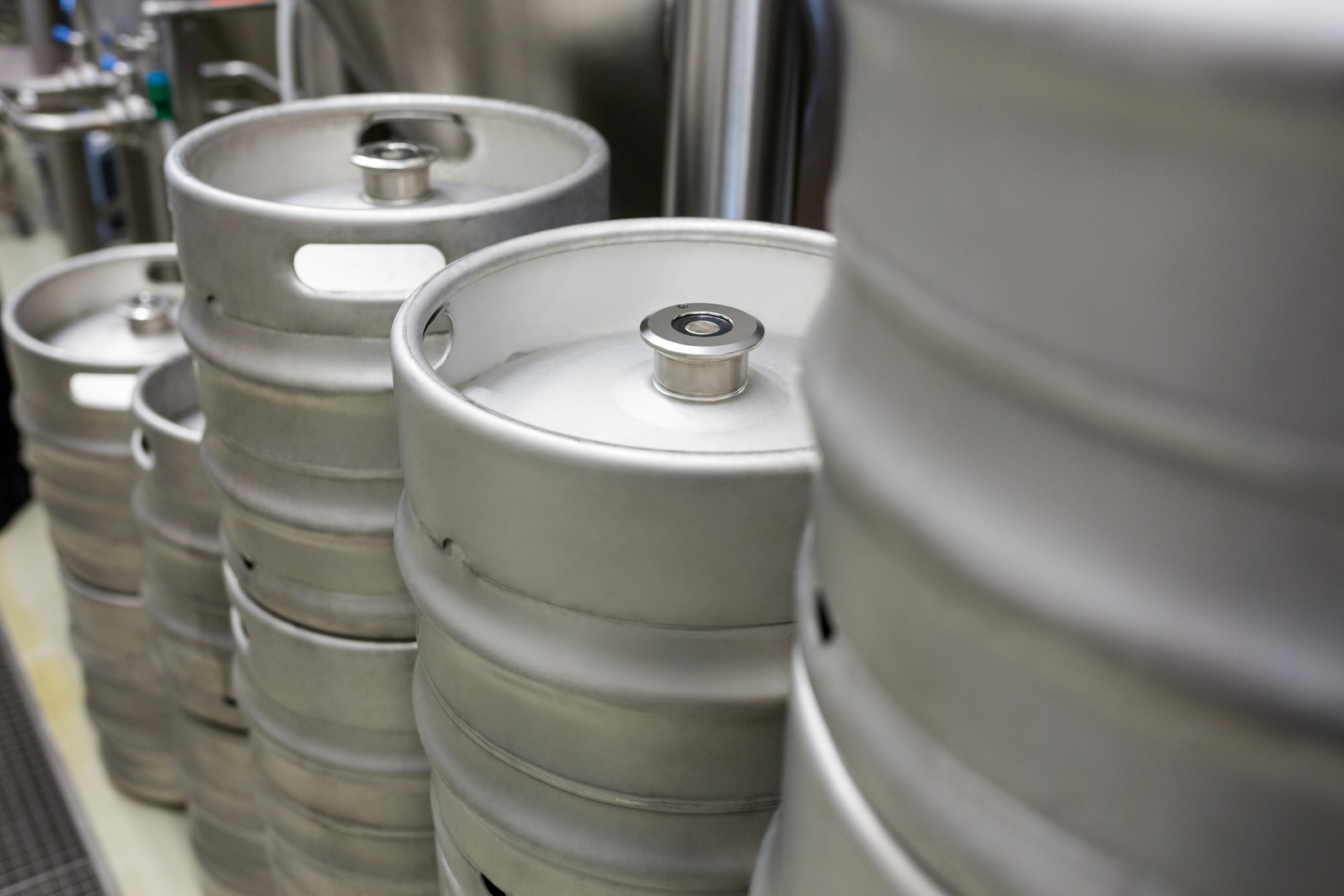
Test Filled Kegs for Microleaks
An automatic keg filler can connect to an inline system that checks every pressurized keg for small carbon dioxide leaks.
The inspection happens after filling and before the keg is capped, labeled, or palletized.
A leaking keg should be removed from the line automatically, which prevents product loss, pressure problems, customer complaints, and early oxidation during distribution.
A keg can look perfectly filled while a damaged valve or seal slowly releases gas.
Finding that leak inside the brewery is much cheaper than discovering it after the keg reaches a customer.
Section 3: Financial Logistics and Cold-Side Vessel Selection
Splitting your beer between draft and small-pack formats depends on your distribution channels.
When planning long-term, managers run financial comparisons of a keg vs can for craft beer format.
Aluminum cans give wide retail reach, making them the standard for stores and direct sales.
But canning lines need big upfront money, constant labeling costs, and lots of warehouse space.
Stainless steel kegs give far better margins, because one durable shell can be washed and reused for decades.
A steel keg also protects the beer from light and temperature swings, keeping its carbonation for months.
For taprooms with high retail volume, reusable draft cuts material waste and improves cash flow.
Section 4: Closed-Loop Mechanical Workflows of Modern Racking Lines
Adding an advanced draft setup means understanding the core steps of the craft beer kegging process.
The closed loop starts at the receiving dock, where empty returns are sorted by neck style and size.
The kegs then move onto the wash tracks of a system that handles cleaning and filling in sequence.
The first stage vents out leftover pressure and stale beer into a floor drain.
Next, the inside gets a hot, high-pressure caustic wash to dissolve organic soils and beer stone.
After a fresh-water rinse, an acid sanitizer neutralizes minerals and creates a sterile surface.
The final stage uses steam to kill wild yeast, then a carbon dioxide purge to remove moisture, before the head completes a counter-pressure fill with no air exposure.
For wash-line design standards, engineers consult the European Hygienic Engineering & Design Group (EHEDG).
Detect the Keg Type Automatically
A sensor can identify whether the incoming keg is a reusable steel keg or a non-returnable plastic keg.
The PLC then selects the right program automatically, so a disposable keg can skip the washing stages and get lower pressure and different handling speeds.
Automatic identification reduces operator errors and lets mixed container formats move through the same filling system safely.
Selecting the wrong program can damage a lightweight one-way keg or waste time washing a keg that does not need it.
Automatic detection gives the machine the information it needs before the cycle begins.
Section 5: Volumetric Milestones for Cellar Layout Planning
Every growing brewery scales its filling lines to its batch sizes and sales volumes.
For labs, startups, or recipe teams, knowing beer keg sizes helps match production to the market.
A sixth-barrel keg holds about 5.16 US gallons and suits low-volume specialty styles in tight spaces.
As a venue grows, quarter-barrel kegs are a mid-tier option, holding about 7.75 US gallons.
For startups with local wholesale accounts, the half-barrel keg is the standard workhorse, holding 15.5 US gallons.
A high-capacity semi-automated system lets you process these different volumes quickly.
As demand climbs, automated lines keep high-speed runs going without manual bottlenecks.
Section 6: Coordinating Cold-Side Machinery Assets and Flow Control Loops
A high-efficiency floor combines several sub-systems into one connected workflow.
A commercial brewery kegging system is more than the filling valves and intake manifolds.
It relies on chemical dosing pumps, steam boilers, gas regulators, and heavy-duty conveyors.
The main control board watches temperature and pressure in real time, adjusting flow to prevent foam.
If an unwashed keg shows a sudden pressure drop, the software flags it and stops the line.
This tracking keeps dirty or damaged kegs out of the filling loop, protecting the whole batch.
For control-layout guidance, teams consult the Siebel Institute of Technology.
Save Filling Recipes for Different Products
The automatic keg filler should store individual recipes for each beverage and keg format.
A recipe can set the target volume, initial pressure, filling pressure, flow profile, venting sequence, and final slow-fill settings.
Once validated, the same recipe can be reused on future runs, which improves consistency and reduces reliance on the operator’s judgment.
A highly carbonated lager may not fill well with the same settings used for a stout, cider, or still wine.
Saved recipes let the machine repeat the best process each time the product returns to the line.

Section 7: Metallurgical Standards and Bio-Security Washing Cycles
The alloy and inside surface finish of your kegs affect shelf life and daily cleaning costs.
Commercial kegs should be built from premium stainless steel, usually 304 or acid-resistant 316L.
These alloys hold chromium and nickel, which form a self-healing passive layer on the surface.
This passive layer protects the keg from cleaning acids, high-chloride water, and the natural acidity of fruit and hops.
To keep bacteria out, the inside steel should be polished very smooth, with a roughness of 0.8 micrometers or less.
Rough spots, weld lines, or scratches can shelter wild yeast and hide it from a standard keg washer cycle.
For safe wash temperatures, the Master Brewers Association of the Americas (MBAA) has full cellar safety guides.
Section 8: Hardware Compatibility and Coupling Geometry Formats
An international distribution network needs connection hardware that matches your target markets.
When setting up automated lines, you must understand a sankey vs euro keg fitting layout.
The American D-System Sankey coupler is the standard across North America, using a simple twist-and-engage move.
European markets use several couplers, including the A-System slide-on valve and the M-System.
A good filling unit must have flexible coupling heads that adapt to these neck designs quickly.
Using mismatched hardware can cause leaks, foaming, and gas failures at the point of sale.
For layout and piping frameworks, follow the standards from the Deutscher Brauer-Bund.
Confirm Compatibility with Minikegs and KeyKegs
Some breweries package beer in standard reusable kegs, small minikegs, and one-way bag-style containers like KeyKegs.
Each format can need a different filling head, adapter, support platform, pressure limit, and filling recipe.
Before buying an automatic keg filler, list every current and future container format.
Ask how long the changeover takes and whether extra parts or software programs are needed.
A machine that handles a standard steel keg may not be ready for a lightweight one-way container.
Planning for future formats at the start is easier than rebuilding the filling station when a new export chance appears.
Section 9: Gas Supply Engineering and Gas Blend Science
Managing your cold-room gas pressures means balancing gas solubility with your line setup.
When setting up delivery lines, weigh the trade-offs of CO2 vs nitrogen for kegging different styles.
Pure carbon dioxide is the standard for the fizz in crisp lagers and West Coast IPAs.
But stouts and cream ales need a special gas blend, usually 75% nitrogen and 25% carbon dioxide.
Nitrogen dissolves much less than carbon dioxide, which creates tiny, silky bubbles and a creamy feel.
To hold the right pressure in long lines without over-carbonating the beer, use precise gas-blending equipment.
Section 10: Automatic Filler Mechanical Performance Matrix
Choosing your core packaging gear means balancing upfront cost against daily labor hours.
Here is how different equipment tiers compare on throughput, fill checking, and target brewery size.
                        ┌──► Throughput: 10-15 containers per hour
[Manual Single-Station] ├──► Fill check: visual sight-glass
                        └──► Best for: small pilot systems and nanobreweries
                                ┌──► Throughput: 30-45 containers per hour
[Semi-Automated Dual-Head Line] ├──► Fill check: inline magnetic flow metering
                                └──► Best for: growing microbreweries and taprooms
                                 ┌──► Throughput: 60-120+ containers per hour
[Fully Automated Assembly Track] ├──► Fill check: electronic load-cell weighing
                                 └──► Best for: regional production facilities
Section 11: Real-Time Flow Monitoring and Dispensing Mechanics
Great draft service also means teaching your retail accounts how to handle and tap your kegs.
Bar managers and draft techs should master how to tap a keg without making excess foam.
The process means checking that the gas regulators are set right and the beer temperature matches the system.
If the cooler warms even a few degrees, carbon dioxide breaks out of the beer, creating heavy foam.
Before connecting the line, staff should know how to change a keg quickly to cut pouring downtime during busy shifts.
Teaching your retail partners these cellar steps protects quality and gets the most from every keg.
Adjust Parameters Without Interrupting Production
The HMI should let authorized operators change permitted filling parameters while the machine keeps running.
Adjustable settings may include pressurization time, venting time, target volume, filling speed, and the final slow-fill stage.
Access levels should stop untrained operators from changing critical safety or quality settings, and every change should be stored in the machine’s log.
Stopping the whole line for a small timing fix wastes valuable packaging time.
Controlled live adjustments let experienced operators respond to changing product conditions without restarting the system.
Compare Automatic Fill-Stop Technologies
Some automatic keg fillers use a float device to detect when the keg reaches the required level.
When beer reaches the float, the mechanism sends a signal or closes the outlet, stopping the fill without constant operator watching.
Float control is simple and effective, but the device must stay clean and move freely, so compare it with volumetric flow meters and load-cell weighing systems.
An automatic stop is only reliable when the part detecting the beer is clean and working.
A sticky or damaged float can cause an incomplete fill or let the keg overflow.
Use Conductivity to Detect Product Arrival
A conductivity sensor can tell when beer has displaced water, sanitizer, or gas inside a filling circuit.
The sensor measures changes in electrical conductivity and sends the data to the PLC.
This helps the system control product transitions, keep the wrong liquid from reaching the keg, and reduce beer loss at the start or end of a run.
A flow meter measures how much liquid has moved, but it may not always tell which liquid is present.
Conductivity gives the filler another way to recognize when beer has actually reached the filling head.
Section 12: Fleet Procurement Strategy and Logistics Management
Deciding whether to buy your whole keg fleet or use a rental service depends on your cash flow.
When planning, weigh the trade-offs of keg rental vs buying your fleet.
Buying your own branded steel kegs gives a long-term asset that builds equity over time.
But buying a fleet needs a big upfront investment and adds tracking, return logistics, and maintenance costs.
For fast-growing startups, a rental service adds flexibility, letting you scale your keg count instantly.
A rental model removes tracking tasks, lowers launch costs, and delivers kegs already inspected and sanitized.
Request Factory Assembly and Testing
Whenever possible, the automatic keg filler should be assembled and tested at the maker’s facility before shipping.
A factory acceptance test can verify filling accuracy, valve sequences, sensor responses, safety interlocks, alarms, and communication between the PLC and HMI.
The brewery should receive a written test report and a clear list of the utilities, connections, and installation work needed on site.
Finding a wiring, valve, or software problem at the factory is much easier than finding it after the machine arrives.
Factory testing shortens commissioning and gives the brewery a clearer picture of what installation day will need.
Track Every Keg Through the Filling Line
RFID tags, QR codes, or barcodes can give every reusable keg a unique digital identity.
The system can link the keg to its cleaning cycle, beer batch, filling date, target volume, inspection results, customer destination, and return history.
This supports inventory management, targeted recalls, fleet maintenance, and investigations when a quality problem is reported.
A reusable keg can travel through the brewery and market many times.
A digital identity helps the team see where it has been, what it held, and whether it has repeatedly failed inspections.
Check the Availability of Replacement Components
Fillers built with widely available industrial components can be easier and cheaper to maintain.
Before choosing a machine, identify the makers of its pumps, sensors, valves, PLC, HMI, pneumatic parts, and electrical controls.
Confirm whether replacement parts can be bought locally or only from the supplier, and keep critical seals, sensors, and valves in stock.
A small sensor should not keep an expensive filler out of service for weeks.
Standard components give the maintenance team more sourcing options and reduce dependence on international shipments for every minor repair.
Section 13: Integrating Automated Racking Systems
Keeping your reusable kegs clean means a dedicated, industrial cleaning station.
A professional cellar uses modular assets that form a connected network of brewery kegging equipment.
This setup relies on chemical dosing pumps, steam boilers, gas regulators, and heavy-duty conveyors.
Adding a reliable keg cleaning and filling system creates a fast loop that keeps your cellar running smoothly.
By protecting your floor with automated hardware, your team can focus on making great, consistent beer.
Section 14: Final Summary and Operational Packaging Blueprint
Choosing your core setup means a clear view of your sales goals, floor space, and upfront budget.
If you run a taproom where beer sells fast on-site, a compact semi-automated dual-head unit is an affordable path.
But if you want to grow wholesale across many states, a fully automated industrial line is essential.
Be sure to check your floor weight limits, balance your gas blends, and enforce strict automated cleaning loops.
By choosing the right setup for your volume and treating your line as a key partner, your team can deliver excellent beer to the market.
Contact Us