
Introduction
A complete malting plant is not a single machine.
It is a connected production system that receives raw barley, prepares it, moves it through the main malting sections, and stores the finished malt.
Every part of the plant must be designed to work with the others.
The capacity of the steeping vessels must match the germination area, the kiln, the conveying system, and the finished malt storage.
Good plant design begins with a few practical questions.
How much malt must the plant produce? How much space is available? Which utilities are already present? How automated should the production line be?
These decisions affect the plant layout, equipment size, energy use, labor requirements, cleaning, maintenance, and future expansion.
A well-designed malting plant reduces unnecessary grain movement, prevents production bottlenecks, and gives operators better control over every batch.
The malting process turns raw grain into malt, one of the most important ingredients in beer.
While hops add aroma and bitterness, and yeast produces alcohol, malt provides the sugars, flavor, color, and body that make beer possible.
The systematic conversion of raw barley or alternative cereal grains into fermentable substrates is executed through advanced industrial methodologies collectively referred to as malt processing.
These setups guarantee that the resulting brewery malt complies with strict commercial specifications for extract yield, diastatic power, and color potential.
[Raw Agricultural Barley]
          │
          ▼
   [Malt House] ──► Utilizing Automated Processing Infrastructure
          │
          ▼
   [Finished Brewery Malt] ──► Sent to Brewhouse for Mash Extraction
That’s useful to understand analysis of the modern malting process.

What is a complete malting plant?
The industrial malting process is a biological sequence designed to trick raw grains.
The maltster creates the same warm and wet conditions that seeds find in the soil during spring.
This makes the grain start to grow.
As the grain begins to sprout, it produces special enzymes.
These enzymes break down the grain’s natural barriers and make the starch inside easier to reach.
The grain would normally use this starch to grow roots and leaves.
To achieve absolute consistency across thousands of tons of grain, commercial facilities deploy a specialized, highly integrated network of machinery known as malting equipment.
A complete malting plant includes all the systems needed to manage the grain from delivery to final malt dispatch.
The main production sections are connected by conveyors, bucket elevators, pipes, valves, air ducts, fans, and a central automation system.
Each section must have enough capacity to support the complete production cycle.
A plant normally includes the following areas.
Raw Barley Reception and Storage
The plant begins with the delivery and storage of raw barley.
This area can include truck unloading stations, intake pits, grain cleaners, weighing systems, sampling points, bucket elevators, and raw grain silos.
The storage capacity must be large enough to protect production from supply delays.
The intake and storage system must support the raw material requirements of barley malting, including separation between different varieties and crop lots.
The silos should also allow different barley varieties or crop lots to remain separate.
The intake area should be easy to clean and should control dust before the grain enters the production sections.
Grain Cleaning and Grading
Before steeping, the barley must be cleaned and graded.
Screens, aspiration systems, magnets, and separators remove dust, stones, metal, broken kernels, and other unwanted material.
Uniform grain size is important because kernels of different sizes absorb water at different speeds.
A good cleaning and grading section therefore supports more consistent production throughout the plant.
Steeping Section
The steeping section contains the vessels used to hydrate the barley before germination.
Its design must consider batch size, water supply, drainage, aeration, carbon dioxide removal, vessel cleaning, and grain transfer.
The number and size of the steeping vessels must match the production schedule.
If this section is too small, it can limit the output of the entire plant.
Germination Section
After steeping, the grain moves to germination vessels, drums, boxes, or beds.
This section needs controlled airflow, cooling, humidification, and mechanical turning.
The system must keep conditions even across the complete grain bed and prevent hot or dry areas.
The germination area often requires several units so that different batches can remain in production at the same time.
Access around the vessels is also important for inspection, cleaning, and maintenance.
Kilning Section
The kiln removes moisture from the green malt and prepares it for safe storage.
The section includes the kiln bed, heating system, fans, air ducts, dampers, filters, temperature controls, and exhaust or heat-recovery equipment.
Kiln capacity must be balanced with the amount of grain leaving the germination section.
A kiln that is too small can become the main production bottleneck.
Deculming and Final Cleaning
After kilning, the dried rootlets are removed from the finished malt.
This area can include deculming machines, screens, aspiration systems, dust filters, weighing equipment, and quality-control sampling points.
The finished product should leave this section clean, stable, and ready for storage or delivery.
Finished Malt Storage and Dispatch
Finished malt is stored in dedicated silos before packaging or bulk shipment.
The storage area should protect the malt from moisture, pests, contamination, and mixing between different malt varieties.
Depending on the project, the dispatch area may include bulk truck loading, bagging stations, pallet handling, weighing systems, and product traceability controls.
Utilities and Support Systems
A complete malting plant also needs reliable utility systems.
These may include water treatment, hot-water production, steam or gas heating, compressed air, electrical distribution, ventilation, dust collection, wastewater management, laboratories, workshops, and cleaning systems.
These support areas must be included in the plant layout from the beginning.
Adding them later can create poor access, high operating costs, and unnecessary production interruptions.
Why Complete Plant Design Matters
In commercial brewing, beer malts are universally recognized as the absolute foundation of the beverage.
The quality of the finished malt depends on how well the complete plant works as one system.
Stable production requires balanced equipment capacity, controlled grain movement, uniform airflow, reliable water and heat supply, and accurate process monitoring.
Plant layout also affects product loss and contamination risk.
Raw grain, wet processing, hot drying, and finished malt areas should follow a clear production flow without unnecessary crossings.
Operators must be able to reach vessels, conveyors, filters, fans, valves, and ducts safely.
Good access makes inspection, cleaning, and maintenance faster and reduces unplanned downtime.
The building and the process equipment should therefore be designed together.
Choosing the machines first and trying to fit them into an unsuitable building can create difficult transfers, poor ventilation, limited maintenance space, and higher operating costs.
Complete Malting Plant Layout
The layout determines how grain, people, air, water, and energy move through the facility.
A good layout follows the natural production sequence:
Raw barley reception → cleaning and storage → steeping → germination → kilning → deculming → finished malt storage → dispatch.
The shortest route is not always the best route. The design must also provide enough space for cleaning, equipment removal, inspections, emergency access, and future expansion.
Horizontal Layout
In a horizontal plant, the main sections are arranged across one or more buildings.
This layout usually provides easy access to the equipment and can simplify maintenance. However, it needs more land and may require more conveyors and elevators to move the grain.
It is often suitable for sites where space is available and future expansion is expected.
Vertical Layout
A vertical or tower layout uses different building levels to move grain partly by gravity.
This can reduce the number of horizontal conveyors and make better use of a small site. It can also reduce some grain-handling requirements.
However, the structure is more complex and must provide safe access to equipment installed at different heights.
Compact Modular Layout
A modular plant uses prefabricated or standardized sections that can be installed in stages.
This solution can be useful for smaller producers or projects that need to increase capacity over time.
The first installation should still include space, utility connections, control capacity, and structural preparation for future modules.
Multi-Line Industrial Layout
Large plants may use several steeping vessels, germination units, and kilns operating in parallel.
This allows multiple batches to move through the facility at the same time and can provide greater production flexibility.
The conveying and automation systems must prevent batches or malt varieties from being mixed during transfer.
How to Size a Complete Malting Plant
Plant capacity should be defined in tons per batch, tons per day, and expected tons per year.
Annual production cannot be calculated from vessel volume alone. It also depends on production time, cleaning time, maintenance, planned downtime, the number of operating days, and the number of parallel units.
Batch Capacity
Batch size determines the basic capacity of steeping vessels, germination units, kilns, conveyors, and storage bins.
All sections should be designed around the same practical batch quantity. Significant differences between sections can create waiting time, partial loads, or production bottlenecks.
Balanced Section Capacity
Each stage keeps the grain for a different amount of time. For this reason, a plant may need more germination capacity than steeping or kilning capacity.
The engineering team should prepare a complete production schedule showing where every batch will be at every point in the cycle.
This schedule helps determine the correct number of vessels, beds, kilns, transfer systems, and intermediate storage bins.
Storage Capacity
Raw barley storage should support the purchasing and delivery schedule.
Finished malt storage should support production even when dispatch or packaging is temporarily delayed.
Storage capacity must also allow different barley lots, malt recipes, and finished products to remain separate.
Future Expansion
The plant should not be designed only around its first year of production.
Space can be reserved for additional vessels, germination units, kiln capacity, silos, conveyors, fans, and utility equipment.
Planning these connections during the original project is normally easier than modifying a plant that is already operating.
Automation and Central Plant Control
A complete malting plant should use one control strategy across all production sections.
The automation system can manage grain transfers, valves, pumps, fans, dampers, heating equipment, turning systems, alarms, and production recipes.
Sensors can monitor temperature, humidity, airflow, pressure, water level, vessel weight, motor status, and other operating conditions.
A central PLC and SCADA system allows operators to view the plant from one control station.
It can also record batch information and show how the main process conditions changed over time.
Recipe management helps operators repeat the same production settings for each malt type. Alarm histories and production reports make it easier to identify problems and improve future batches.
Automation does not remove the need for skilled operators.
It gives them better information and allows them to respond earlier when conditions move outside the required range.
The correct automation level depends on plant capacity, available labor, product variety, maintenance support, and budget.
Engineering and Project Design
The design process should begin before individual machines are selected.
The first step is to define the required products, batch size, annual capacity, number of recipes, operating schedule, and possible future expansion.
The engineering team should then study the site, available buildings, road access, ground conditions, water supply, electricity, heating fuel, drainage, wastewater treatment, and local environmental requirements.
A complete project normally includes process design, mechanical engineering, electrical systems, automation, civil works, ventilation, dust control, and utility distribution.
Material Flow
Grain transfers should be short, controlled, and easy to inspect.
Conveyors and elevators must have enough capacity to move a complete batch within the available transfer time.
The design should also reduce grain damage, dust generation, product mixing, and unnecessary handling.
Hygiene and Cleaning
Wet areas need suitable drainage and surfaces that can be cleaned easily.
Dust-producing areas need aspiration and filtration systems. Finished malt should be protected from contact with raw grain, waste material, and external moisture.
Equipment should include access points for inspection and cleaning without creating difficult or unsafe working conditions.
Maintenance Access
Motors, bearings, fans, valves, burners, filters, and control components need enough space around them for maintenance.
The layout should allow heavy parts to be removed without dismantling unrelated equipment.
Safe platforms, stairs, walkways, lighting, and lifting points should be included in the original design.
Energy Efficiency
Kilning and ventilation are major parts of the plant’s energy demand.
Efficient industrial dryer systems, heat recovery, insulated ducts, and variable-speed fans can reduce the energy required during kilning.
Heat recovery, insulated ducts, variable-speed fans, efficient burners, controlled air recirculation, and accurate automation can reduce unnecessary energy use.
Energy-saving systems should be evaluated as part of the complete plant design rather than added as separate components later.
Installation and Commissioning
Before production begins, every mechanical, electrical, and automation system must be tested.
Commissioning should verify grain transfers, vessel loading, airflow, heating, safety devices, alarms, recipes, cleaning procedures, and communication between the different sections.
Operators should also receive practical training before the plant moves into normal production.
Choosing the Right Complete Plant Configuration
The correct plant is not always the plant with the largest vessels or the highest automation level.
The best configuration is the one that matches the required capacity, available site, product range, utility supply, labor, maintenance resources, and expansion plan.
A small modular plant may be the right choice for local or specialty production.
A multi-line industrial plant may be more suitable when continuous output, large storage capacity, and several simultaneous batches are required.
The complete project should be evaluated through total production flow, not by comparing individual machines separately.
The Malting Process and Different Types of Malt Houses
The physical infrastructure engineered to execute the malting process has evolved significantly over centuries of industrial development.
Not all malting plant are the same.
They can be different in size, production capacity, and level of automation, depending on the needs of the brewery.
Some are designed for large industrial production, while others focus on smaller batches or specialty malts.
Below are the main types of malting plant used by breweries around the world.
                          ┌──► Traditional Floor (Artisan / Manual Craft)
                          ├──► Pneumatic Drum (High Uniformity Commercial)
Malting Plant Configurations ├──► Saladin Box (Large-Batch Automated Industrial)
                          ├──► Tower System (Vertical Space-Saving)
                          └──► Micromalthouse (Pilot-Scale / Hyper-Local Custom)
1. Traditional Floor Malthouse
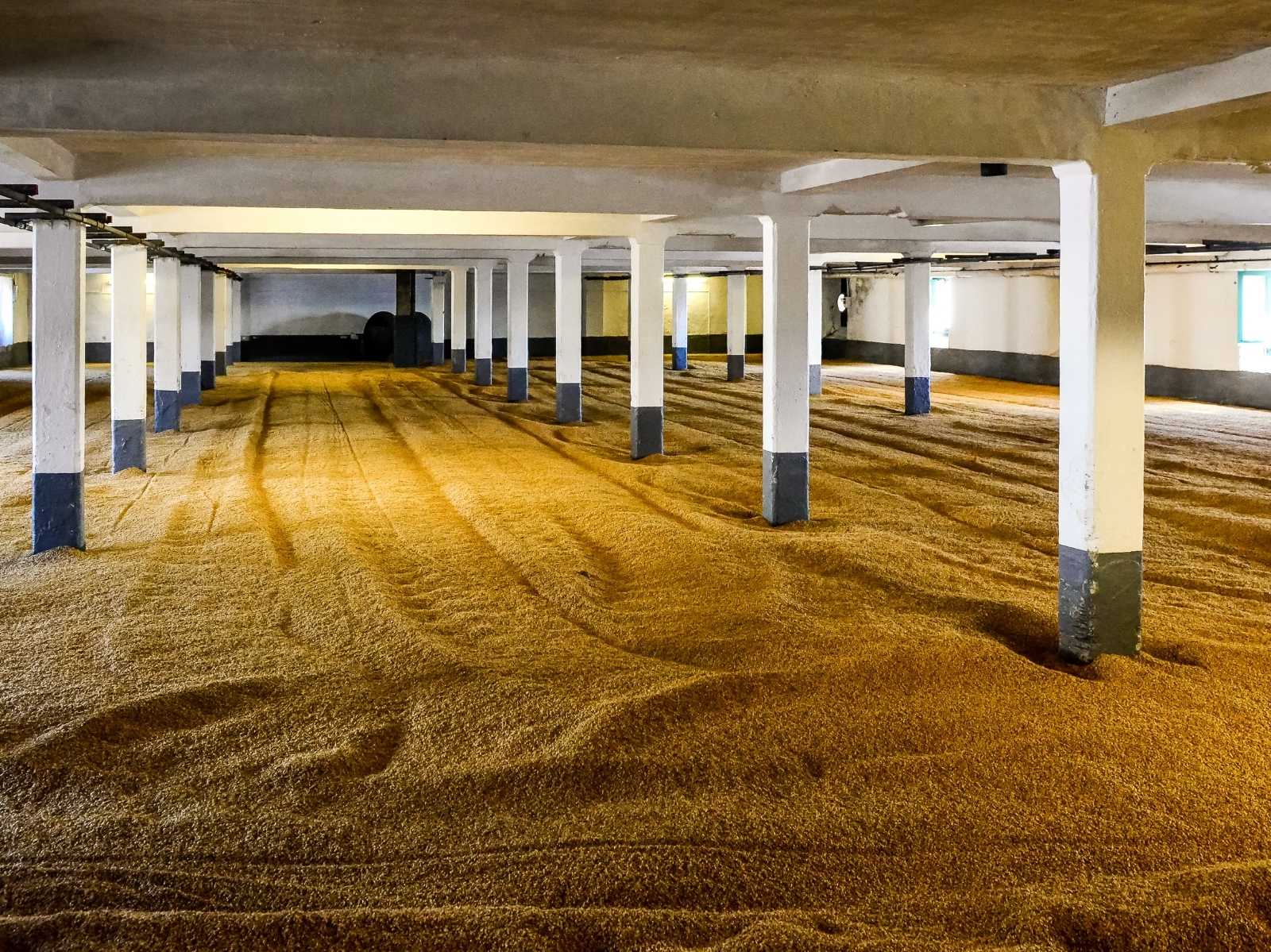
A floor malting plant is the oldest and most traditional way to produce malt.
After soaking, the barley is spread across a large floor in thin layers.
As the grain starts to grow, it produces heat.
To keep the temperature under control, workers regularly turn the barley by hand.
This allows fresh air to circulate and helps the grain grow evenly.
[Open Steeping Vat] ──► Manual Spread onto Concrete Floor ──► Continuous Shovel Turning by Hand
This method requires a lot of manual work and can only produce small batches.
Even so, many craft breweries and distilleries still prefer it because it creates unique flavors that are difficult to achieve with fully automated systems.
For this reason, it is often used to produce premium and specialty malts.
A malting plant is not limited to steeping, germination and kilning equipment.
A complete facility also includes raw material reception, grain cleaning, silo storage, conveying systems, process automation and final malt
handling.
These stages help protect the quality of the barley before malting begins.
Ensure also that the plant can operate efficiently from grain intake to finished malt.
For breweries and malt producers, considering the full plant layout is essential when planning capacity, workflow and long-term production needs
2. Drum Malting Plant (Industrial or Pneumatic Malting)
A drum malting plant is a modern and highly automated system.
After soaking, the barley is moved into large rotating drums.
As the drums slowly turn, the grain stays evenly mixed and continues to germinate under controlled conditions.
[Automated Steep] ──► Motorized Rotating Steel Drum ──► Integrated Forced Air Temperature Control
The rotating drums and automated airflow keep the barley at the right temperature and moisture throughout the process.
This creates even germination and consistent malt quality.
Because most of the work is automated, these systems need less manual labor and can produce much larger quantities of malt.
For this reason, they are widely used by large commercial breweries.
3. Saladin Box Malting Equipment
A Saladin malt house is designed to process large amounts of barley while using space efficiently.
The grain is placed inside long concrete boxes with a perforated floor.
Air is pushed up from below to keep the temperature and moisture at the right levels during germination.
                                  [Forced Air Plenum]
                                          │
                                          ▼
[Deep Concrete Trough Bed] ──► Perforated False Floor ──► Automated Traveling Screw Turners
A moving machine travels along the top of the box and gently turns the barley as it grows.
This keeps the grain evenly mixed, improves airflow, and helps maintain the right temperature during germination.
The Saladin system can handle large batches while keeping the process consistent.
For this reason, it is widely used by medium and large malt producers.
4. Batch Malting Equipment
A batch malt house processes one batch of barley at a time instead of running a continuous production process.
In many systems, the same machine is used for different stages, such as soaking, germination, and sometimes even drying.
[Single Compartment Vessel] ──► Sequential Program Shift: [Steep] ──► [Germinate] ──► [Kiln]
Because each batch is processed separately, it is easy to produce different types of malt without affecting the others.
Although batch systems produce smaller quantities than large industrial plants, they offer much greater flexibility.
This makes them ideal for creating specialty malts, such as caramel, crystal, or roasted malts, used in many craft beer recipes.
5. Tower Malting Equipment
A tower malt house is designed to save space by building upward instead of outward.
The different stages of the malting process take place on separate floors, all inside the same building.
[Top Floor: Steeping Vats]
          │ (Gravity Drop)
          ▼
[Middle Floors: Germination Decks]
          │ (Gravity Drop)
          ▼
[Bottom Floor: Malting Kiln Bed]
          │
          ▼
[Finished Product Output Silo]
The process starts at the top of the tower, where the barley is soaked.
The grain then moves down through the building by gravity. It passes through the germination stage before reaching the kiln for drying.
Because gravity moves the grain from one level to the next, fewer conveyors and machines are needed.
This helps reduce energy use and makes the system more efficient.
Tower malting plant are a good choice where space is limited and high production is required.
6. Micromalthouses
The growing popularity of craft beer has increased the demand for small malting plant.
These compact systems are designed to produce small batches of malt, making them ideal for local breweries and custom recipes.
[All-In-One Automated Micro Vessel] ──► Hyper-Local Grain Source ──► Specialized Craft Product
Many micromalthouses use a single machine for soaking, germination, and drying.
This makes the process easier to manage, even with a small team.
Although they produce smaller quantities than large malt houses, they offer much greater flexibility.
For this reason, they are popular with craft breweries and small malt producers who want to create unique and customized malts.
Not all malting plants are designed for full industrial production.
Pilot and micro-malting plants are smaller systems used for testing grain quality, developing malt recipes, running research trials, or producing
small batches before moving to larger-scale production.
These systems can be useful for breweries, laboratories, universities, and malt producers that need to test barley behavior, germination
performance, enzyme activity, and final malt quality before investing in a complete industrial plant.
7. Eco-Friendly Malting Equipment
As sustainability becomes more important, many malt houses are adopting more environmentally friendly production methods.
Modern systems are designed to reduce water and energy consumption while maintaining the same high malt quality.
┌──► Energy Source: On-Site Solar Arrays & Wind Turbines
├──► Thermal Recovery: Run-Around Coil Heat Exchangers
└──► Conservation: Multi-Stage Closed-Loop Water Recycling
Modern eco-friendly malt houses use technologies that reduce energy and water consumption.
Many use renewable energy, recover heat from the drying process, and recycle water whenever possible.
These solutions lower production costs, reduce environmental impact, and make the malting process more sustainable.
8. Multi-Stage Malting Plant
A multi-stage malting plant is designed for continuous, high-volume production.
Instead of completing one batch at a time, different stages of the process run at the same time in separate areas.
This allows production to continue without interruptions.
Vessel Segment A: [Steeping Batch #3] ──► Simultaneous Operation
Vessel Segment B: [Germinating Batch #2] ──► Simultaneous Operation
Vessel Segment C: [Kilning Batch #1] ──► Simultaneous Operation
In a multi-stage system, different batches of barley are processed at the same time.
While one batch is soaking, another is germinating, and another is being dried.
As soon as one stage is finished, a new batch takes its place.
This continuous process increases production and keeps the equipment working efficiently, making it ideal for large industrial malt producers.
A modular malting plant allows producers to start with a system that matches their current capacity and expand it as demand grows.
This can be useful for craft breweries, small malt producers or companies entering the malt market gradually.
Instead of replacing the entire plant, additional steeping, germination, kilning or storage capacity can be added over time.
This makes the investment more flexible and helps the plant adapt to future production goals

Conclusion
A malting plant plays a key role in beer production by turning raw grain into high-quality malt through the malt processing process.
To produce consistent results, every stage must be carefully controlled, from soaking and germination to drying inside malting kilns.
A complete malting plant should be selected as an integrated production system, not as a collection of separate machines.
The final design should be based on target capacity, batch scheduling, site layout, storage requirements, utility consumption, automation level, cleaning, maintenance access, and future expansion.
When every section is correctly sized and connected through one control system, the plant becomes easier to operate and can produce more consistent malt with fewer handling losses and fewer production bottlenecks.
Contact Us
Author | Operations & Sourcing Lead
Luca is an operations and sourcing specialist with extensive experience in project management and industrial manufacturing. This blog serves as a technical resource for brewery owners, offering clear guidance on equipment design, quality control, and supplier evaluation. In parallel, Luca advises international buyers on sourcing and importing brewing equipment—helping them manage risk, avoid costly mistakes, and achieve consistent production quality.