
Quick answer: a commercial kegging machine cleans, sanitizes, purges, pressurizes, and fills beer kegs with repeatable settings. The right machine is not simply the fastest model. It must match the brewery’s peak keg demand, keg sizes and valve types, available utilities, cleaning method, floor layout, labor plan, beer temperature, carbonation, quality targets, and future growth.
Small breweries may benefit from a manual or semi-automatic washer and filler. Growing distribution breweries often need separate wash and fill heads so one keg can be filled while another is cleaned. Larger plants use conveyors, automatic handling, inspection, tracking, and reject systems. This guide explains how to compare those options and calculate the real capacity and operating cost.
How to Choose a Commercial Kegging Machine
Begin with the weekly packaging schedule rather than annual beer production alone. Determine the largest number of kegs that must be cleaned and filled in one shift, the available packaging hours, changeover time, sanitation time, planned maintenance, and expected line efficiency. Include seasonal peaks and contract-packaging commitments.
| Buying factor | Questions to answer | Evidence to request |
|---|---|---|
| Throughput | How many clean and filled kegs are required in the peak hour and shift? | Guaranteed output by keg size and defined operating conditions |
| Keg fleet | Which volumes, spear types, neck heights, and reusable or one-way formats are used? | Compatibility list, adapters, recipes, and changeover procedure |
| Utilities | Are power, hot water, steam, compressed air, CO2, drains, and beer supply sufficient? | Utility schedule with pressure, flow, temperature, quality, and peak demand |
| Cleaning | Which wash stages, chemicals, temperatures, flows, and validation records are required? | Cycle diagram, tank and pump data, sensors, alarms, and sample cycle report |
| Filling quality | How are pressure, volume, temperature, foam, oxygen, and product loss controlled? | Fill method, accuracy, flow range, reject logic, and acceptance test |
| Labor and layout | Who loads, transfers, inspects, labels, palletizes, and cleans the equipment? | Layout, operator positions, ergonomic assessment, and staffing assumption |
| Support | Which parts and technicians are available after installation? | Warranty, spare-parts list, response time, manuals, software, and training scope |
Ask each supplier to quote against the same written specification. A machine advertised at 40 kegs per hour may reach that number only with one small keg, short recipes, ideal utilities, continuous loading, and no product or size changes. Comparable quotations should state whether capacity refers to washing, filling, or the complete dirty-keg-to-full-keg process.
Section 1: The Rise of Draught Beer Packaging
Running a commercial brewery means taking draft packaging seriously.
For a growing brewery, washing and filling steel kegs by hand quickly becomes a bottleneck.
A commercial-grade Kegging Machine is the best way to speed up your cold-side work.
A modern high-capacity system automates the chemical washes, steam sterilizing, and counter-pressure gas purges.
This makes sure every keg leaves the floor clean and filled to a consistent volume.
The right layout depends on your floor space and your weekly distribution targets.
Whether you run a small brewpub or a big packaging plant, your filling line shapes your daily labor costs.
This guide breaks down the fluid mechanics, the layouts, and the hygiene standards behind kegging gear.
Section 2: Oxygen Protection During Cold-Side Filling
Keeping draft beer fresh over long shipping trips means controlling oxygen during filling.
Oxygen is the enemy of packaged beer: it oxidizes the beer and destroys hop oils and aroma.
To protect the flavor, a good kegging machine uses a sealed, counter-pressure process at the valve head.
Before any beer enters the keg, the machine locks onto the neck and runs a multi-stage gas purge.
It pulls a deep vacuum to clear the air, then fills the keg with pure inert gas.
Next it matches the keg’s gas pressure to the bright beer tank.
With the pressures balanced, the beer flows gently down the keg wall, with no splashing or foaming.
To read more about how oxygen affects flavor, see the Brewers Association.
Flow-Controlled Keg Filling
Automatic kegging machines can control how much beer enters each keg with a calibrated flow meter, instead of just timing the fill.
The system measures the liquid passing through the filling head and closes the valve when the target volume is reached.
This keeps fills consistent across different keg sizes and reduces underfilling and product give-away.
It also handles the changes in product pressure that happen during a run.
Filling every keg for the same number of seconds does not always give the same result.
Beer pressure, temperature, and flow shift during a run, so measuring the liquid is more reliable.
Still calibrate the flow meter regularly and check it against the real filled-keg weight.

Section 3: Comparing Packaging Formats and Cellar Economics
How you split your beer between kegs and small-pack depends on your sales channels.
When planning ahead, managers often compare a keg vs can for craft beer.
Cans reach a wide retail audience, which makes them the standard for grocery shelves and direct sales.
But canning lines need a big upfront investment, ongoing label costs, and storage for raw materials.
Steel kegs give a much better margin per ounce, because the durable containers are washed and reused for decades.
A steel keg also protects the beer from light and temperature swings, holding carbonation for months in cold storage.
For taprooms with high on-site volume, reusable kegs lower waste and improve cash flow.
Reusable and One-Way Keg Compatibility
Some kegging machines can fill both steel kegs and one-way plastic kegs.
Steel kegs are washed, inspected, returned, and refilled.
One-way kegs skip the internal wash before filling, so they follow a different workflow.
A machine that handles both gives you more flexibility across markets.
Steel kegs are best for local customers with a good return network.
One-way kegs make exports and far deliveries simpler, because a reusable keg only pays off if you get it back.
Before buying, confirm the supported plastic keg brands, sizes, connectors, and change parts.
Section 4: How Modern Wash-and-Fill Machines Work
Keg Washer and Filler Cycle Explained
A reusable keg returns with unknown pressure, residual beer, soil, and handling history. The machine must remove that residue, expose internal surfaces to the validated wash sequence, clear chemicals, sanitize or sterilize as specified, and prepare the keg for low-oxygen filling. Actual stages vary by equipment and brewery procedure.
- Connection and verification: the head engages the valve, confirms position, and starts only when guards and safety conditions are satisfied.
- Depressurization and recovery: residual pressure and old product are released through a controlled path instead of toward the operator.
- Pre-rinse: water removes loose beer, yeast, and soil before chemical cleaning.
- Caustic wash: the validated solution circulates at the required concentration, temperature, flow, and time.
- Intermediate rinse: displaced soil and chemical are removed and monitored before the next stage.
- Acid or sanitizer stage: the chosen brewery program addresses mineral soil and microbial control where applicable.
- Final rinse or steam: the cycle follows the validated process and chemical manufacturer’s instructions.
- Gas purge and pressurization: air and residual moisture are displaced and the keg is prepared near the filling pressure.
- Counter-pressure fill: beer enters under controlled pressure and flow to limit foam and gas breakout.
- Release and inspection: the filled keg is disconnected, checked, identified, and moved to cold storage.
Validate More Than Cycle Time
A completed timer does not prove that a keg was cleaned. Verify chemical concentration, temperature at the relevant point, circulation or flow, contact time, return condition, rinse endpoint, and pressure sequence. Monitor tank level and chemical age and investigate blocked lines, failed heaters, worn pumps, damaged seals, and incorrect recipes.
Use routine manual tests to verify automated conductivity or dosing signals. Establish acceptable ranges and a response for readings outside them. If a critical stage fails, the machine should reject or quarantine the keg rather than continuing silently to filling.
Inspect Kegs Before Washing
- Reject kegs with severe dents, damaged chimes, distorted necks, corrosion, burns, unauthorized holes, or unreadable identity.
- Separate foreign-owned, unknown, incompatible, and one-way containers from the reusable fleet.
- Identify sticky valves, bent spears, damaged seals, unusual odor, non-beverage residue, or evidence of misuse.
- Keep suspect kegs away from the normal cleaning line until their history and safe handling method are known.
The washer is not a repair station. A powerful cleaning cycle cannot correct a mechanically damaged valve, unsafe pressure vessel, or deeply contaminated container. Create clear accept, repair, quarantine, and scrap criteria and train receiving employees to apply them consistently.
To fit a kegging setup into your facility, it helps to break down the craft beer kegging process.
The whole closed-loop cycle starts at the receiving dock, where empty kegs are sorted by neck style and size.
The kegs go onto the wash tracks of a machine that cleans and fills them in sequence.
First it vents out leftover pressure and stale beer into a floor drain.
Then it sprays the inside with a hot caustic wash to dissolve soils and beer stone.
After a fresh-water rinse, an acid sanitizer neutralizes minerals and leaves a sterile surface.
The last step uses steam to kill wild yeast, then a carbon dioxide purge to remove moisture.
Finally, the filling head moves in for the counter-pressure fill, with no air contact.
For wash-line design standards, engineers consult the European Hygienic Engineering & Design Group (EHEDG).
Water Recovery During Keg Washing
A keg washer can cut water use by recovering suitable water from one stage and reusing it in an earlier pre-rinse.
For example, fairly clean final-rinse water can be collected in a separate tank and reused to remove beer and loose soil from the next kegs.
The recovered water must stay separate from the final hygienic rinse and be monitored to prevent contamination.
Tank design, filtration, temperature, chemical carryover, and drain controls all matter.
Not every liter of water has to go straight to the drain.
Water that is no longer good for the final rinse can still work for the first, dirtiest stage of the next wash.
The key is to keep recovery automatic, measurable, and fully separated from the clean final rinse.
Section 5: Keg Sizes for Startups and Large Cellars
Every growing brewery sizes its filling line to its batch sizes and sales targets.
For labs, startups, or recipe teams, knowing your beer keg sizes helps match production to the market.
A sixth-barrel keg holds about 5.16 US gallons and suits low-volume specialty styles in tight bar spaces.
A quarter-barrel is a mid-tier option at 7.75 US gallons.
The half-barrel is the standard commercial workhorse at 15.5 US gallons.
A high-capacity semi-automated system lets you process these sizes quickly.
As demand climbs, automated lines keep high-speed runs going without manual bottlenecks.
Section 6: The Parts of a Complete Kegging System
Kegging Machine Utility Requirements
Machine performance depends on stable utilities. A filler may be capable of the promised speed but run slowly when beer supply, compressed air, CO2, hot water, steam, power, or drainage falls below the design condition. Request both average consumption and maximum instantaneous demand.
| Utility | Design questions | Common consequence of poor supply |
|---|---|---|
| Beer | Temperature, pressure, flow, carbonation, pipe size, distance, and bright-tank availability | Foam, slow fills, inconsistent volume, or excess product loss |
| CO2 or process gas | Purity, pressure, peak flow, regulation, storage, monitoring, and ventilation | Incomplete purge, pressure faults, flavor risk, or safety alarm |
| Compressed air | Pressure, flow, dryness, filtration, quality, and simultaneous demand | Slow actuators, valve faults, contamination risk, or stopped cycles |
| Water | Potability, hardness, temperature, pressure, flow, treatment, and recovery | Weak rinsing, scale, chemical variation, and excess consumption |
| Steam or heat | Pressure, capacity, quality, condensate return, warm-up time, and safety | Low wash temperature, long startup, or incomplete sterilization stage |
| Electricity | Voltage, phase, frequency, connected load, fault current, listing, and disconnects | Failed inspection, heater delay, motor problems, or panel modification |
| Drainage | Peak flow, temperature, pH, solids, air gaps, trench position, and permit limits | Flooding, unsafe floors, backups, or wastewater noncompliance |
Provide the supplier with actual site conditions before manufacturing. The electrical and mechanical contractors should review the utility schedule and connection drawings. Confirm whether quoted output includes warm-up time and whether heating multiple chemical tanks can occur while the brewery is using steam or hot water elsewhere.
Layout and Material Flow
Separate dirty returns from clean, purged, and filled kegs. The preferred path moves in one direction from receiving and inspection through washing, filling, identification, cold storage, and shipping. Avoid carrying dirty containers over exposed filling equipment or crossing forklift traffic through the operator’s work zone.
- Allow space for incoming pallets, sorting, quarantine, repairs, chemicals, tools, and rejected kegs.
- Provide safe access to tanks, pumps, filters, valves, sensors, panels, and guards for maintenance.
- Position drains to capture expected discharge without hoses crossing walkways.
- Protect electrical panels and controls from washdown while maintaining required working clearances.
- Check ceiling height, doors, floor loading, ventilation, lighting, and lifting needs.
- Plan label, collar, cap, scanning, weighing, palletizing, stretch wrapping, and cold-room movements.
Manual, Semi-Automatic, or Fully Automatic?
A manual machine reduces capital cost but depends heavily on operator timing, attention, lifting, and valve operation. Semi-automatic equipment automates the critical cycle while people load and unload kegs. Fully automatic lines reduce handling and can add conveyors, orientation, inspection, coding, palletizing, and data collection, but require more space, capital, maintenance skills, and dependable utilities.
Choose automation based on lifetime workload, not prestige. Calculate labor per shift, ergonomic risk, product loss, cleaning consistency, maintenance coverage, expected growth, and the cost of a packaging bottleneck. A simpler machine that the team can maintain may outperform a complex line without local technical support.
A high-efficiency packaging floor combines several sub-systems into one workflow.
A commercial brewery kegging system is more than the filling valves and beer intake.
It relies on a network of chemical dosing pumps, steam boilers, gas regulators, and heavy-duty conveyors.
The master PLC control panel watches temperature and pressure in real time and adjusts flow to prevent foaming.
If an empty keg shows an odd pressure drop, the software flags it and stops the line.
This keeps dirty or damaged kegs out of the fill loop, protecting the whole batch.
For automated-control layouts and quality profiles, teams consult the Siebel Institute of Technology.
Cleaning Recipes and Digital Cycle Records
An automated kegging machine can store a different recipe for each keg size, product, and cleaning condition.
Each recipe can set wash time, chemical temperature, pressure, flow rate, purge time, rinse stages, and filling settings.
The system can also record whether every stage hit its target, creating a digital batch record you can review during quality checks or a complaint.
Access levels should stop untrained operators from changing critical sanitation settings.
A cleaning process should not depend on whether the most experienced worker is in that day.
Stored recipes give every operator the same starting point and reduce the temptation to shorten a stage when it is busy.
The cycle record is evidence of what the machine actually did, instead of relying on memory.
Automatic Leak Inspection After Filling
A filled keg should be checked for leaks before it goes into cold storage or onto a truck.
An optical inspection system can look at the valve and neck for liquid, foam, or other signs of a leak.
Pressure sensors or check-weighing can add another layer of verification.
Catching the problem on the line stops a leaking keg from soaking a pallet, losing carbonation, or arriving half-empty.
A small leak may not be obvious while the keg is still on the machine.
After hours in storage, it can leave beer across the pallet and drop the pressure inside.
A failed keg should be rejected automatically and moved to a safe area for inspection.
Section 7: Stainless Steel and Chemical Cleaning
The alloy and interior finish of your kegs affect shelf life and daily cleaning costs.
Commercial kegs should be made from premium stainless steel, usually AISI 304 or acid-resistant 316L.
These alloys hold chromium and nickel, which form a self-healing passive layer on the surface.
That layer protects the keg from cleaning acids, high-chloride water, and the natural acidity of fruit and hops.
To block bacteria, the inside must be polished smooth, with a roughness average of 0.8 micrometers or less.
Rough spots, weld lines, or scratches can shelter wild yeast from a standard keg washer cycle.
For safe wash temperatures and staff safety, the Master Brewers Association of the Americas (MBAA) has full cellar guides.
Conductivity Monitoring for Cleaning Chemicals
Time and temperature alone cannot confirm that the right chemical strength reached the keg.
Conductivity sensors can tell apart rinse water, caustic, acid, sanitizer, and product as they move through the machine.
The PLC uses these readings to confirm the correct liquid is present before moving to the next stage.
This stops a weak cleaning solution from passing unnoticed and helps catch too much chemical carryover during rinsing.
A dosing pump can run for the right time and still deliver the wrong strength if a tank is low or a line is blocked.
Conductivity gives the machine another way to check what is actually in the pipe.
It does not replace manual chemical testing, but it warns the operator before a batch of kegs finishes a weak cycle.
Safe Depressurization and Spear Maintenance
Kegs are pressure vessels and must be treated as pressurized even when they look empty.
Before removing, tightening, or servicing a spear, fully depressurize the keg with the correct equipment and procedure.
Do this right before maintenance, because a keg with leftover beer can build pressure again as it warms.
Only trained people should remove spears, with the keg secured and the operator out of the ejection path.
An empty keg is not automatically a safe keg.
Leftover gas or beer can keep it under real pressure, and warming can raise that pressure again.
Lockout steps, protective gear, pressure checks, and the maker’s instructions should all be part of your written maintenance program.
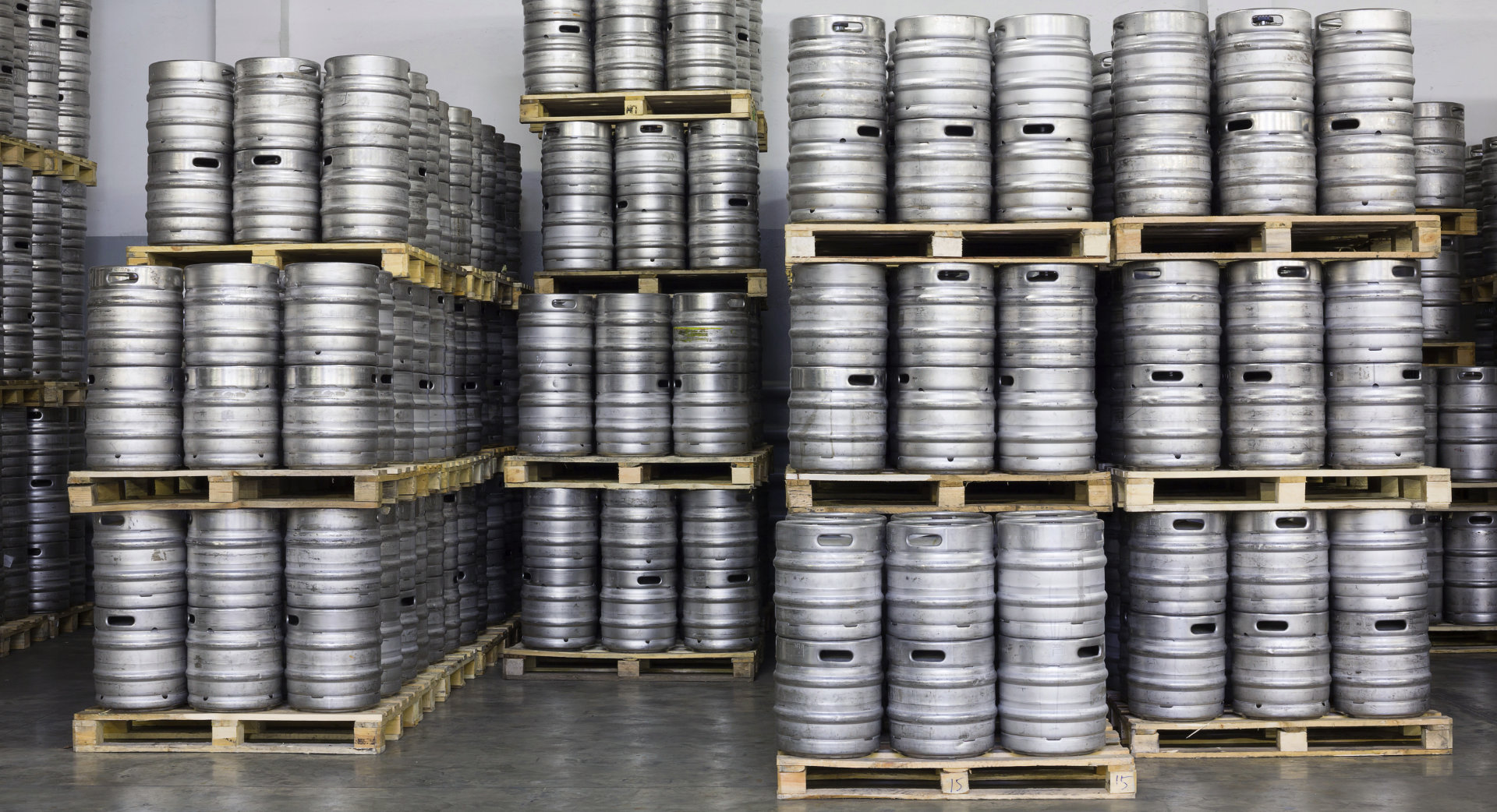
Section 8: Keg Fittings and Coupler Types
Selling into different markets means picking connection hardware that matches the draft gear there.
When setting up your lines, study the differences of a sankey vs euro keg fitting layout.
The American D-System Sankey coupler is standard across North America, with a simple twist-and-engage connection.
European markets use several couplers, including the A-System slide-on valve and the M-System.
A good automatic keg filler needs flexible coupling heads that adapt to these neck designs quickly.
Using the wrong hardware leads to leaks, foaming, and gas failures at the point of sale.
For safe workflow access and proper piping, follow the frameworks from the Deutscher Brauer-Bund.
Section 9: Gas Supply and Carbonation
Managing gas pressure in the cold room means balancing gas solubility with your line dynamics.
When setting up delivery lines, weigh the trade-offs of CO2 vs nitrogen for kegging for different styles.
Pure carbon dioxide is the standard gas for holding exact carbonation in crisp lagers and hoppy IPAs.
But high-gravity stouts and cream ales need a gas blend, usually 75% nitrogen and 25% carbon dioxide.
Nitrogen dissolves far less than carbon dioxide, which creates tiny, silky bubbles and a creamy mouthfeel.
To hold the right pressure in long lines without over-carbonating, you need precise gas-blending equipment.
For gas safety and line-balance guidance, engineers look at data from the National Restaurant Association.
Section 10: Machine Class Comparison
Calculate Real Kegging Line Capacity
Nameplate speed is not sellable output. Real capacity accounts for startup, warm-up, changeovers, breaks, blocked flow, chemical checks, refilling service tanks, quality samples, rejected kegs, cleaning the machine, maintenance, and the availability of beer and clean containers.
For planning, multiply the demonstrated cycle rate by the scheduled run time and a realistic line-efficiency factor, then subtract planned non-production time. Validate the result with a complete shift trial using the brewery’s actual keg mix and operators. Do not apply one efficiency assumption forever; measure it and investigate recurring losses.
Example Capacity Questions
- Can the washer supply clean kegs as quickly as the filler consumes them?
- Does output change between sixth-barrel, quarter-barrel, half-barrel, 20-liter, 30-liter, and 50-liter kegs?
- Can two heads run different recipes without extending the complete cycle?
- How often must chemicals, filters, water, or service tanks be changed?
- What happens when a keg fails pressure, temperature, rinse, volume, or leak verification?
- How much time is required to change valve type, product, or sanitation recipe?
- Is one employee able to sustain loading, unloading, inspection, scanning, and palletizing safely?
Kegging Machine Cost and Return on Investment
The purchase price is only the first line of the financial model. Compare installation and operating costs over the expected service life. Include shipping, taxes or import charges, rigging, electrical work, plumbing, steam, gas, drainage, permits, commissioning, training, spare parts, chemicals, water, energy, labor, preventive maintenance, software, and downtime.
| Financial input | How to measure it |
|---|---|
| Labor saving | Current hours per keg minus projected hours at realistic line efficiency |
| Beer recovery | Reduction in foam, overfill, spills, leaking kegs, and unusable product |
| Utility saving | Water, chemical, steam, electricity, compressed air, and gas per keg |
| Quality improvement | Reduction in failed cleaning, oxidation, complaints, returns, and destroyed beer |
| Capacity value | Packaging hours released and profitable sales no longer constrained by kegging |
| Ownership cost | Depreciation, finance, maintenance, parts, service, calibration, and downtime |
Use conservative assumptions and test several production levels. The machine may not repay its cost if the brewery lacks keg demand, reliable returns, or sales growth. It may repay quickly when manual packaging blocks tank turns, overtime rises, fills are inconsistent, or cleaning records cannot support quality goals.
Supplier Acceptance Test
Define acceptance before ordering. At the factory or during site commissioning, run the actual keg types and agreed cycle. Verify output, wash parameters, fill accuracy, pressure control, leak detection, alarms, interlocks, recipe security, data export, utility consumption, changeover, machine CIP, and restart after faults.
Record test instruments and calibration. Create a numbered punch list with owner and deadline. Reserve final acceptance until required documents, software backups, manuals, training, spare parts, code inspections, and performance tests are complete.
Choosing your core equipment means balancing upfront cost against daily labor hours.
The table below shows the performance of different equipment tiers:
| Machine Engineering Class | Hourly Container Throughput | Wash Cycle Configuration | Target Brewery Size |
| Manual Single-Station Pod | 10 to 15 Containers / Hour | Manual Valve Lever Operation | Small Pilot Systems & Nanobreweries |
| Semi-Automated Twin-Head Station | 30 to 45 Containers / Hour | PLC-Controlled Wash, Manual Load | Growing Microbreweries & Taprooms |
| Fully Automated Industrial Line | 60 to 120+ Containers / Hour | Automated Conveyors & Inspection Loops | Regional Production Facilities |
Section 11: Flow Monitoring and Dispensing
Good draft service means teaching your retail accounts how to handle and tap your kegs.
Bar managers and draft techs should master how to tap a keg without making too much foam.
The steps include checking the gas regulators and making sure the beer temperature matches the system design.
If the cooler warms even a few degrees, carbon dioxide breaks out and creates heavy foam.
Staff should also know how to change a keg quickly to cut pouring downtime during busy shifts.
Helping your retail partners learn these cellar steps protects quality and gets the most beer out of every keg.
In a draft beer system, keg couplers connect the keg to the dispensing equipment and let the beer flow correctly.
The beer then moves through the beer line until it reaches the beer faucets.
When the customer pulls the tap handle, the faucet opens and the beer pours fresh, clean, and ready to serve.
For more on yeast and draft line hygiene, managers review journals from the American Society of Brewing Chemists (ASBC).
Section 12: Buying vs Renting Your Keg Fleet
Whether you buy your keg fleet or use a third-party service depends on your cash flow.
When planning your finances, weigh the trade-offs of keg rental vs buying your fleet.
Buying your own branded steel kegs gives you a long-term asset that builds equity over time.
But it needs a big upfront investment and brings tracking, return logistics, and maintenance costs.
For fast-growing startups, a rental service adds flexibility and lets you scale your keg count instantly.
A rental model removes tracking, lowers launch costs, and delivers kegs already inspected and sanitized.
RFID and Digital Keg Tracking
Reusable kegs can carry durable RFID tags or barcodes that link each keg to a digital record.
A scanner near the kegging machine can automatically log the keg identity, product, batch, fill date, and destination.
More scans can happen when the keg enters cold storage, leaves the dock, reaches a customer, or comes back.
This builds a full history for each keg.
A steel keg can last many years, but only when you know where it is.
Without tracking, kegs disappear into distributor warehouses, customer cellars, and event venues.
A tag tied to the filling line records this automatically, and over time the data shows which customers return kegs fast and where the fleet gets stuck.
Section 13: Adding an Automated Washing Line
Quality-Control Checks for Filled Kegs
A filled keg should be traceable and verified before release. Set written limits for fill quantity, package identity, leak condition, beer temperature, pressure, carbonation where tested, and dissolved oxygen according to the brewery’s product and process goals.
- Compare flow-meter output with a calibrated scale or another verified volume method.
- Check tare assumptions for different keg sizes, manufacturers, valves, and retained components.
- Trend underfills, overfills, foam loss, rejected kegs, leaks, and product changeovers.
- Use a defined sampling method for dissolved oxygen that avoids adding air during measurement.
- Inspect the valve and neck after filling and quarantine leaking or damaged packages.
- Apply readable product, batch, fill-date, destination, ownership, and handling identification.
- Keep filled kegs cold and define the maximum time before they enter controlled storage.
Investigate trends before they become failures. A gradual increase in fill time can indicate warmer beer, reduced supply pressure, a restricted line, worn valve, gas breakout, or inaccurate instrumentation. A rising leak rate may point to one keg supplier, spear condition, head seal, or handling step.
Preventive Maintenance Checklist
Use operating hours, cycles, condition, and manufacturer instructions to set maintenance intervals. Keep enough planned downtime to complete the work; postponing every task until the line fails turns small wear items into production emergencies.
Daily and Shift Checks
- Inspect heads, seals, hoses, clamps, valves, guards, sensors, drains, and visible leaks.
- Verify chemical levels, temperature, concentration, rinse condition, gas pressure, and compressed air.
- Test critical alarms and safety devices according to the approved procedure.
- Clean exterior product-contact risk areas and remove broken glass, labels, caps, and debris.
- Review cycle failures, rejected kegs, fill variance, and unusual sounds or movement.
Scheduled Maintenance
- Replace seals, gaskets, valve seats, filters, and wear parts at defined intervals.
- Inspect pumps, motors, bearings, drives, cylinders, chains, conveyors, and lifting mechanisms.
- Calibrate or verify flow, pressure, temperature, conductivity, level, and weighing instruments.
- Inspect chemical tanks, heaters, steam components, relief devices, insulation, and corrosion.
- Back up PLC and HMI programs, recipes, parameters, passwords, and machine records.
- Confirm emergency stops, interlocks, guards, grounding, disconnects, and lockout points.
Store critical spares using the exact manufacturer and model references. Common items include head seals, keg-valve adapters, solenoids, sensors, relays, contactors, fuses, pump seals, pneumatic cylinders, and communication components. Protect electronics and elastomers under appropriate storage conditions.
Kegging Machine Safety
A kegging area combines pressure, carbon dioxide, hot liquid, steam, caustic and acidic chemicals, electrical energy, moving equipment, heavy containers, and wet floors. Complete a task-specific hazard assessment and integrate the machine into the brewery’s safety programs.
- Guard pinch, crush, lift, conveyor, and ejection zones and never bypass safety interlocks.
- Use machine-specific lockout/tagout steps for electrical, pneumatic, hydraulic, pressure, heat, and gravity energy.
- Depressurize and verify kegs before spear work, following the keg manufacturer’s procedure.
- Control CO2 with suitable ventilation, monitoring, alarms, training, and emergency response.
- Provide chemical labels, accessible Safety Data Sheets, compatible PPE, and required emergency washing equipment.
- Use mechanical handling, conveyors, lifts, or safe work design to reduce repetitive keg lifting.
- Keep drains functional and respond immediately to beer, chemical, condensate, or water on floors.
Train operators on normal production, fault recovery, cleaning, chemical handling, emergency stops, CO2 alarms, and safe rejection of damaged kegs. Maintenance employees need additional authorization for isolation, testing, entry, pressure work, and electrical tasks.
Keeping a reusable keg fleet clean means setting up a dedicated, industrial keg cleaning and filling system.
A good washer uses automated dosing pumps to hold exact chemical strengths and wash temperatures.
The machine watches its spray patterns so every internal corner gets equal coverage.
This breaks down organic buildup, prevents beer stone, and removes infection risks.
A reliable washing-and-filling loop keeps your cellar running smoothly, so your team can focus on the beer.
Cleaning Different Keg Sizes at the Same Time
Some dual-head kegging machines let each cleaning station use its own settings.
This means the brewery can wash two kegs of different sizes in the same cycle.
The operator can set the cleaning time and purge sequence for each head without sorting the kegs into separate runs.
This helps breweries that regularly use half-barrel, quarter-barrel, and sixth-barrel kegs.
A mixed keg fleet can make packaging days more complicated than expected.
Without independent stations, the team may have to wait until it has enough kegs of the same size to run an efficient cycle.
Adjustable heads let the operator process whatever returns are actually available.
Cleaning the Keg Spear and Valve
Cleaning the body of the keg is not enough.
The wash cycle must also reach the internal spear, valve, spring, seals, and narrow passages in the neck.
A controlled low-flow stage improves contact with these small parts, instead of relying only on the high-volume spray used for the main chamber.
Old beer, yeast, and residue can stay inside the spear when the flow pattern is wrong.
So the machine should use a validated sequence that cleans both the shell and the full valve pathway.
The big steel chamber is the easy part of a keg to clean.
The harder areas are the narrow passages inside the valve and spear, which touch every beer that enters and leaves the keg.
Periodic inspection of the spear is still needed, because damaged seals cannot be fixed by washing alone.
Section 14: Summary and Packaging Blueprint
Commercial Kegging Machine FAQ
Commissioning Checklist for a New Kegging Line
Commissioning connects the manufacturer’s machine with the brewery’s real utilities, beer, kegs, operators, and quality system. Do not accept the line after a short dry demonstration. Complete water trials, cleaning verification, product trials, fault tests, and a sustained production run under agreed conditions.
- Verify installation: confirm level, anchoring, guards, pipe supports, utility connections, drainage, electrical approval, and safe maintenance access.
- Check documentation: compare installed components with final drawings, manuals, certificates, spare-parts lists, and software backups.
- Test utilities: record pressure, flow, temperature, voltage, gas supply, air quality, drainage, and simultaneous demand.
- Run cleaning trials: verify every recipe, tank, pump, heater, sensor, valve, alarm, rinse, recovery, and reject condition.
- Run filling trials: measure fill accuracy, speed, pressure, foam, loss, leaks, dissolved oxygen, and product temperature.
- Challenge faults: safely test low chemical, low level, low pressure, high temperature, sensor failure, opened guard, emergency stop, and restart logic.
- Train the team: cover production, changeover, sanitation, quality checks, maintenance, lockout, chemicals, CO2, and troubleshooting.
- Close the punch list: assign every deviation, retain payment where agreed, and record objective completion evidence.
Documents to Keep With the Machine
- Final layout, process diagram, utility schedule, piping drawings, and electrical schematics.
- PLC and HMI backups, recipes, parameters, passwords, licenses, and recovery instructions.
- Operating, cleaning, maintenance, safety, troubleshooting, and changeover manuals.
- Factory and site test results, calibrations, certificates, training, and acceptance records.
- Asset list, critical spares, supplier contacts, warranty terms, and service history.
Set baseline performance during commissioning. Future teams can compare fill time, utility use, reject rate, chemical consumption, dissolved oxygen, and maintenance against this baseline. Without it, gradual deterioration may look normal until output or beer quality falls sharply.
What does a brewery kegging machine do?
Depending on the model, it can vent returns, pre-rinse, wash with chemicals, rinse, sanitize or steam, purge with gas, pressurize, and counter-pressure fill kegs. Integrated lines may also inspect, weigh, identify, convey, reject, track, and palletize them.
How many kegs per hour does a kegging machine fill?
Capacity ranges from small manual stations to industrial lines processing hundreds of kegs per hour. The meaningful figure is demonstrated complete-line output for the brewery’s keg size, wash recipe, fill volume, utilities, staffing, and efficiency—not the highest number in a brochure.
What is the difference between a keg washer and a keg filler?
A washer prepares reusable kegs through controlled cleaning and sanitation stages. A filler purges, pressurizes, and fills a clean keg. Some machines combine both functions, while higher-output lines use dedicated stations so washing and filling happen in parallel.
How do I size a kegging machine?
Calculate peak kegs required per shift, divide by productive packaging time, and include realistic efficiency, changeovers, sanitation, maintenance, rejects, and growth. Confirm that the washer, filler, operator, utilities, pallet handling, and cold storage can all sustain the same output.
Can one machine fill different keg sizes?
Many machines support several sizes, but the supplier must confirm height, diameter, valve, adapter, handling, recipe, and fill-meter compatibility. Ask for a test with every intended format and measure changeover time.
Can a reusable-keg machine fill one-way kegs?
Some systems can, but one-way formats follow manufacturer-specific preparation and filling instructions and normally do not use the reusable-keg wash sequence. Confirm brand, connector, pressure, handling, and change parts before purchase.
How can a brewery reduce oxygen during keg filling?
Use a tight product path, effective gas purge, controlled counter-pressure fill, cold stable beer, suitable supply pressure, low-foaming operation, and validated procedures. Measure dissolved oxygen with a consistent sampling method and trend results by run and product.
How do you verify that a keg is clean?
Validate and monitor the critical cycle parameters rather than relying on time alone. Check chemical concentration, temperature, flow or circulation, contact time, rinse endpoint, pressure sequence, equipment condition, and periodic microbiological or other verification appropriate to the quality program.
What utilities does a kegging machine need?
Typical systems require electricity, water, drainage, compressed air, CO2 or another process gas, beer supply, and often hot water or steam. Required pressure, temperature, quality, and peak flow are machine-specific and must be confirmed before installation.
When should a brewery automate kegging?
Automation becomes valuable when manual labor, cleaning variation, ergonomic risk, fill inconsistency, product loss, traceability needs, or insufficient output limits profitable production. Compare the total lifetime cost and support needs rather than buying automation solely for speed.
What records should an automatic kegging line keep?
Useful records include keg identity, product, batch, cycle recipe, critical wash values, fill volume, pressure, faults, rejects, operator, date, maintenance, calibration, and destination. Access control and backups help protect the reliability of those records.
Choosing your core kegging setup starts with a clear view of your sales goals, space, and budget.
If you run a taproom where beer sells quickly on-site, a compact semi-automated dual-head machine is an affordable path.
But if you plan to grow wholesale across several states, a fully automated industrial line is essential.
Check your building’s floor weight limits, balance your gas-blending setup, and enforce strict automated cleaning loops.
By matching the equipment to your volume and treating your packaging line as a key partner, your team can deliver great beer every time.
Contact Us

Author | Operations & Sourcing Lead
Luca is an operations and sourcing specialist with extensive experience in project management and industrial manufacturing. This blog serves as a technical resource for brewery owners, offering clear guidance on equipment design, quality control, and supplier evaluation. In parallel, Luca advises international buyers on sourcing and importing brewing equipment—helping them manage risk, avoid costly mistakes, and achieve consistent production quality.
