
Read Time: ⏱️ 10 minutes | By: Luca
Section 1: Stepping Up to High-Volume Production
When a craft brand grows from a local taproom into a regional producer, the demands on your cellar change completely.
Working at an industrial scale means moving past manual, small-batch methods and using heavy-duty equipment that maximizes output.
Investing in a commercial-grade 90 bbl fermenter is a major milestone for a growing regional distribution company.
A single 90-barrel vessel holds exactly 2,790 US gallons, or about 10,560 liters, of fermenting beer.
This large capacity lets high-output facilities combine several brewhouse batches into one tank, cutting down on labor.
Finding the Best fermenter types for your expansion means looking past basic capacity to the engineering details.
From heavy chemical loads to high fermentation temperatures, large industrial steel has to be built to a high standard.
This guide breaks down the building needs, cooling loads, and layouts required to fit a 90 BBL vessel into your cellar.
Section 2: Unitanks vs. Low-Pressure Fermenters
At this large scale, the pressure rating you choose affects your whole finishing and packaging schedule.
A standard fermentation tank with a 60-degree cone collects yeast cleanly at the lowest point and handles basic primary fermentation well.
But many low-pressure Conical fermenters are only rated to hold gas pressures below 5 PSI.
Because they cannot handle high pressure, you cannot force-carbonate finished beer inside them, so you have to transfer it to another tank.
This shows the clear difference of a split brite tank vs fermenter setup, which adds extra labor hours.
A high-pressure 90 BBL unitank, by contrast, is built from heavy reinforced steel and can handle working pressures up to 30 PSI.
That strength lets you ferment, harvest yeast, cold-crash, and fully force-carbonate the beer inside one sealed tank.
Finishing the whole cycle in one tank protects the beer from oxygen, speeds up packaging, and reduces product loss.

Planning for a Future Unitank Conversion
A brewery that initially purchases a standard fermenter should verify whether the vessel can be converted into a unitank later.
This upgrade requires more than adding a carbonation stone. The original tank shell must already have the correct pressure rating, safety valves, sanitary ports, cooling coverage, and structural reinforcement.
Before ordering, ask the manufacturer which additional components are required for conversion and whether the original pressure certification remains valid after the upgrade.
An upgrade-ready vessel can reduce future capital costs because the brewery can begin with a simpler configuration and add pressure-fermentation or carbonation functions when packaging volume increases. (stouttanks.com)
A brewery may not need every unitank feature on the first day of operation. However, choosing a tank that can be upgraded later can prevent an expensive replacement.
Ask the supplier whether the fermenter can safely accept a carbonation stone, spunding equipment, pressure-transfer fittings, and the other components required for unitank operation.
The important point is that the tank must already be engineered for the intended pressure. A parts kit cannot transform a low-pressure vessel into a certified high-pressure tank unless the original shell was designed for that purpose.
Section 3: Choosing the Right Fermenter Size
Every growing beverage company sizes its fermenters based on daily brewhouse output and market demand.
For research labs, small startups, or recipe development, a compact 1 bbl fermenter is the standard choice for pilot testing.
These small setups let you check yeast performance and test new ingredients without risking large amounts of raw materials.
As a business grows into a neighborhood taproom, most operators move up to a 5 bbl fermenter to supply their draft lines.
For startups launching with local draft accounts, a 7 bbl fermenter is the classic entry-level production size.
Moving up to a 10 bbl fermenter gives growing taprooms the extra volume to support packaging lines like mobile canning.
As local demand climbs, a 15 bbl fermenter or a heavy-duty 30 bbl fermenter improves labor efficiency.
Finally, a 90 bbl fermenter provides the volume to keep high-speed canning and bottling lines running all the time.
Calculating the Number of 90 BBL Fermenters
The correct number of tanks depends on occupancy time, not only annual production volume.
A beer that ferments, conditions, and waits for packaging inside the same vessel for twenty-one days requires significantly more cellar capacity than a beer released after ten days.
Calculate how many 90 BBL batches the brewery expects to fill each week and multiply that number by the average number of weeks each tank remains occupied.
Additional capacity should be reserved for CIP, maintenance, delayed packaging runs, slow fermentations, seasonal demand, and unexpected quality holds.
Breweries producing many beer styles generally need more separate tanks than facilities concentrating on a few high-volume core products, even when total annual output is similar. (Tiantai Microbrewery)
Buying one large fermenter does not automatically solve a cellar-capacity problem.
First, determine how many days each beer remains in the vessel, including fermentation, conditioning, cold crashing, carbonation, and any time spent waiting for packaging.
Then look at how many tanks are occupied at the same time during the busiest production period. Leave at least some spare capacity because a delayed canning run or slow lager fermentation can quickly block a cellar operating with no margin.
Section 4: Insulation and Multi-Zone Cooling
Managing the large amount of heat that big yeast populations produce during fermentation takes heavy-duty utilities.
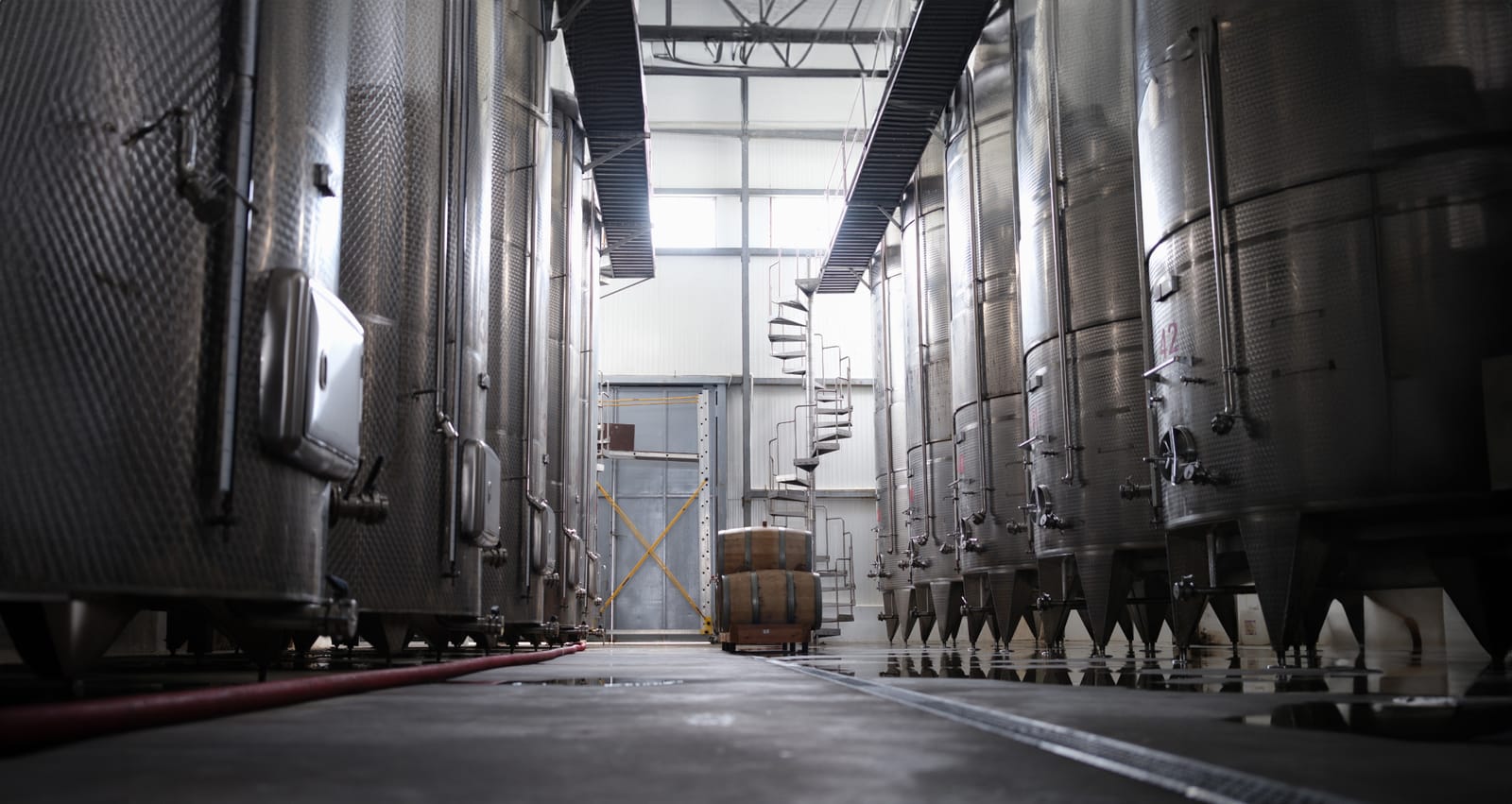
A professional 90 bbl fermenter must be wrapped in a thick, continuous layer of high-density, fire-retardant foam insulation.
This barrier keeps room temperature from changing the beer’s core temperature, which keeps your utility costs under control.
To deliver cooling efficiently, these tanks use several independent laser-welded dimple jackets connected to a high-flow glycol chiller loop.
Dimple jackets push the coolant into a turbulent flow that breaks up static layers and speeds up heat transfer.
By splitting the jackets into separate zones on the lower cone and upper cylinder, brewers can control temperature accurately even during partial fills.
To review insulation standards and energy calculations, engineers use the data compiled by the Brewers Association.
Future-Proofing the Glycol Distribution Network
Adding a 90 BBL fermenter affects more than the capacity of the glycol chiller.
The main supply and return headers, pumps, valves, pipe diameters, insulation, and distribution manifolds must also carry the increased coolant flow without excessive pressure loss.
When planning a multi-stage expansion, installing larger glycol trunk lines from the beginning can make future fermenters easier to connect.
The brewery should reserve manifold positions, electrical control points, valve space, and physical pipe routes for the tanks expected during the next expansion phase.
The chiller must still be evaluated separately. Larger piping cannot compensate for a refrigeration unit that lacks enough capacity for peak fermentation heat and simultaneous cold-crashing loads. (cassmanmachine.com)
Many breweries plan space for future tanks but forget to plan the pipes that will cool them.
When the main glycol headers are too small, adding another fermenter can require major plumbing work throughout the cellar. Installing slightly larger supply and return lines during the first expansion can make later connections much easier.
Leave spare manifold positions and control connections as well. The objective is to add the next tank without dismantling the utility system that serves all the existing vessels.
Section 5: Using One Vessel Across Different Drinks
The core rules of temperature control, cleaning, and fluid transfer apply across every professional drink industry.
In the wine industry, a dedicated WINE FERMENTER uses wide shapes to manage the cap of grape skins during red wine maceration.
White winemakers, cider producers, and mead makers often use vertical conical tanks that look exactly like standard beer gear.
This overlap lets microbreweries easily add small, niche drinks to their product line.
Setting up a beer brewing fermenter for multi-drink work means using flexible temperature control systems.
To study how different yeast strains react to different tank shapes, production teams read the manuals shared by the Siebel Institute of Technology.
Understanding these fermentation basics helps your team keep quality high across every product style.
Section 6: Secondary Aging and Separating Yeast
Managing your yeast across several generations keeps raw-material costs low and fermentations consistent.
In a traditional two-stage process, brewers move the young beer off the primary yeast into a dedicated secondary fermenter.
This secondary tank works well for long aging, wood-chip additions, or adding specialty fruits and spices.
Moving the beer to a clean tank keeps it from sitting on dead yeast too long, which prevents rubbery off-flavors from yeast autolysis.
A high-pressure unitank removes the need for that transfer by letting you dump yeast straight out of the bottom cone.
By opening the lower valve, the cellar team can remove trub and harvest healthy yeast without exposing the beer to air.
To study yeast biology and healthy harvesting, production managers read the journals shared by the American Society for Enology and Viticulture (ASEV).
Butterfly valves are commonly used in brewery tanks and piping systems because they are simple, strong, and easy to operate.
They help control the flow of beer, wort, or cleaning solution during production and transfer.
A racking arm is also useful because it allows the brewer to draw clear beer from the tank while leaving yeast, sediment, and other solids at the bottom.
Dry-Hopping Access for Large Fermenters
Dry hopping a 90 BBL batch requires a dedicated and safely accessible addition point.
The port must be large enough for the expected hop quantity and positioned so operators can use it without awkward lifting or uncontrolled access to the top of the vessel.
For heavily dry-hopped beers, the brewery should consider a closed or purged dosing system that limits oxygen exposure and prevents hop material from being released suddenly into a pressurized tank.
Safe access may require a fixed platform, approved mobile stairs, or correctly designed ladder supports rather than an unsecured portable ladder.
The dry-hopping procedure should also define tank pressure, valve sequence, CO₂ purging, personal protective equipment, and how the port will be cleaned before and after every addition. (Craft Kettle)
Adding hops to a small fermenter is simple. Adding a large quantity of hops to a 90 BBL vessel several meters above the floor is a different operation.
Plan the port position and access system before the tank is manufactured. The cellar team should not have to carry heavy hop containers up an unstable ladder or open a fitting without a controlled pressure procedure.
A closed, purged dosing setup can make the process cleaner and help protect the beer from oxygen while improving operator safety.
Section 7: Steel Grade and Surface Polish
The steel blend and inside finish of your tanks directly affect your beer’s shelf life and daily cleaning costs.
Beverage tanks must be built from high-grade stainless steel, usually AISI 304 or the more acid-resistant AISI 316L.
These alloys contain plenty of chromium and nickel, which form a self-healing protective layer on the metal.
This layer protects the tank from cleaning acids, hard water, and the natural acidity of fruit and hops.
To stop bacteria from taking hold, the inside steel must be polished smooth, to a roughness of 0.8 micrometers or less.
Any rough spots, weld lines, or scratches can shelter wild yeast and hide them from a microbrewery fermenter cleaning run.
To set safe cleaning temperatures and protect your staff, the Master Brewers Association of the Americas (MBAA) offers complete safety guides for cellar work.

Comparing Shell, Jacket, and Cladding Thickness
A fermenter quotation should clearly separate the thickness of the internal product shell, cooling jacket, and external cladding.
These components perform different functions. The internal shell contains the liquid and pressure, the dimple jacket carries the glycol, and the external cladding protects the insulation from moisture and physical damage.
Steel thickness should not be evaluated independently from vessel diameter, working pressure, weld design, support structure, and applicable engineering standards.
Request a complete technical drawing showing material grade, thickness, insulation depth, vessel weight, design pressure, test pressure, and reinforcement details.
This makes it easier to compare quotations that may appear similar but use very different structural specifications. (The Vintner Vault)
Two 90 BBL fermenters can look almost identical while being built with very different amounts of steel.
Do not accept a quotation that provides only the tank capacity and stainless-steel grade. Ask for separate values for the internal shell, cooling jacket, exterior cladding, and insulation.
Thicker metal is not automatically better, because the entire vessel must be engineered as one structure. The goal is to confirm that the tank has been designed correctly for its diameter, pressure, weight, and daily operating conditions.
Factory Acceptance Testing and Documentation
A 90 BBL fermenter should be inspected and tested before it leaves the manufacturing facility.
The brewery should request documentation showing the operating pressure, test pressure, test method, duration, acceptance criteria, and results for both the product shell and glycol jackets.
A complete factory acceptance review can also include weld inspection records, stainless-steel material certificates, surface-finish verification, dimensional checks, valve testing, sensor calibration, and confirmation of every sanitary port.
The final tank should be compared with the approved technical drawing before shipment.
Photographs, videos, signed test reports, and component lists provide useful evidence that the vessel matches the agreed specification and reduce the risk of discovering defects after international transport. (CHENMA)
Do not wait until installation to discover whether the tank holds pressure or whether every fitting is in the correct position.
Ask the manufacturer to complete a documented factory acceptance test before shipping. The report should identify what was tested, the pressure used, how long the test lasted, and whether both the vessel and cooling jackets passed.
Compare the finished tank with the approved drawing and request clear photographs of the welds, ports, nameplate, valves, and internal finish. Correcting a problem at the factory is far easier than correcting it inside the brewery.
Section 8: Vessel Configuration Comparison
Choosing your high-volume tank setup means weighing pressure limits against your long-term budget.
The table below outlines the engineering choices common to standard commercial cellar expansions:
| Vessel Engineering Class | Maximum Working Pressure | Carbonation Stone Capability | Optimal Production Application |
| Atmospheric Open Vat | Zero Pressure (Atmospheric) | Incompatible | Specialized traditional ales and wild sour beers |
| Standalone Low-Pressure CCT | Restricted below 5 PSI | Incompatible (Requires bright tank transfer) | Core primary fermentation and quick yeast harvesting |
| High-Pressure Unitank Shell | Rated for 15 to 30 PSI continuously | Fully Compatible via sanitary tri-clamp ports | Full-cycle single-vessel processing from pitch to packaging |
Defining the Complete Scope of Supply
The quoted price of a 90 BBL fermenter does not always include every component required for commissioning.
Ask the supplier to provide an itemized scope covering butterfly valves, clamps, gaskets, pressure and vacuum relief devices, pressure gauges, sample valves, racking arms, thermowells, glycol fittings, spray devices, sensors, and control valves.
The brewery should also confirm whether spare gaskets, replacement valve seats, mounting hardware, electrical cables, and glycol manifolds are included or must be purchased separately.
Comparing only the tank-shell price can make a low quotation appear more attractive than it really is. The correct comparison is the total delivered, installed, connected, and operational cost of the vessel. (ABS Commercial)
A fermenter described as “complete” may still arrive without several parts needed to connect and operate it.
Before accepting the quotation, ask for a detailed list of every valve, clamp, gasket, sensor, pressure device, and glycol connection included in the price.
Small missing components can create delays during installation and become surprisingly expensive when they must be ordered separately. Compare suppliers using the final operational cost, not only the price of the stainless-steel tank.
Section 9: Automated Clean-In-Place (CIP) Cleaning
Keeping your whole cellar perfectly clean is the single most important factor in protecting your brand and shelf life.
To clean these large tanks without manual scrubbing, plants use automated Clean-In-Place (CIP) loops.
The CIP setup uses a high-flow spray ball in the top dome to push cleaning fluids across every inside surface.
A standard CIP run starts with a fresh-water pre-rinse to remove heavy yeast cakes and loose material.
Next, a heated caustic solution (sodium hydroxide) is pumped through the loop at 60°C to 80°C to break down oils and proteins.
After a quick rinse, an acid wash of phosphoric and nitric acid dissolves hard minerals like calcium oxalate scale.
To check how well the cleaning worked, quality teams use automated ATP swabs to confirm the tank is sterile.
For advice on removing stubborn mineral scale without scratching the polished steel, producers follow the manuals shared by the Brewers Association.
Serviceable CIP Spray Devices
The effectiveness of a CIP system depends on both cleaning coverage and long-term maintainability.
A spray device connected externally with a sanitary clamp can be removed, inspected, cleaned, or replaced without requiring a worker to enter the fermenter.
This is particularly useful on a 90 BBL vessel, where internal access is difficult and should be avoided whenever routine maintenance can be completed from outside.
The brewery should compare static spray balls with rotating cleaning nozzles based on required flow, operating pressure, soil load, water use, and the geometry of the tank.
Spray-device inspection should be included in preventive maintenance because blocked openings, worn rotating parts, or incorrect installation can reduce cleaning coverage even when the chemical cycle appears normal. (DME)
The spray device is easy to forget because it operates inside a closed tank. However, a blocked or damaged nozzle can leave entire areas of a 90 BBL fermenter inadequately cleaned.
Choose a design that the cellar team can remove and inspect from outside the vessel. This makes routine maintenance faster and avoids unnecessary internal entry.
The best option is not always the most complicated nozzle. It is the one that provides complete coverage at the available pump flow and can be checked, cleaned, and replaced without creating a major maintenance job.
Section 10: Floor Strength and Ceiling Layout
Planning an industrial cellar layout means paying close attention to your building’s size and its concrete floor limits.
Your fermenters should be bought in exact multiples of your brewhouse batch size to keep the workflow smooth.
Leaving enough empty space at the top of the tank, called headspace, is a critical safety factor.
As yeast breaks down sugars, it creates a thick, expanding layer of foam and protein called krausen.
If a tank is overfilled and lacks headspace, this foam can clog the pressure relief valves and build dangerous pressure.
For standard ales, leave at least 25 percent headspace, and up to 35 percent for very active yeast strains.
You also need to check floor load limits, because a full tank weighs several tons and needs thick reinforced concrete.
To make sure your layout allows safe access and proper piping, follow the frameworks from the European Hygienic Engineering & Design Group (EHEDG).
Delivery Route and Rigging Plan
Confirming that the tank fits inside the cellar is not enough. The entire route from the delivery vehicle to the final installation point must be measured.
Check loading access, exterior gates, door openings, corridors, ceiling obstructions, turning space, and the area required for a crane or forklift.
The rigging plan should define how the fermenter will be unloaded, moved, tilted if necessary, raised into its final position, leveled, and secured.
The equipment used for lifting must be suitable for the tank’s shipping weight and dimensions. The installation contractor should also verify that the designated lifting points are compatible with the proposed method.
Complete this review before manufacturing because changing the tank height, leg length, or fitting position after delivery can be extremely expensive. (NFE Brew)
A tank can fit perfectly in the cellar and still be impossible to bring through the building.
Measure every doorway, corridor, corner, overhead pipe, and exterior access point along the delivery path. Remember that the vessel may need additional room to turn or tilt while being moved.
The brewery and installation company should agree on the crane, forklift, lifting points, and final anchoring method before the tank leaves the factory. Discovering an access problem on delivery day is one of the most expensive mistakes in a cellar expansion.
Section 11: Real-Time Density Sensors and Tracking
The drinks industry is moving to digital systems that turn traditional cellars into connected, data-driven networks.
In the past, a cellar worker had to draw a sample from every active tank each day to check the sugar level with a glass hydrometer.
This manual step takes labor hours, wastes beer, and adds a small contamination risk every time the valve is opened.
To fix this, modern facilities install digital inline density sensors right into the tank walls.
These sensors use continuous pressure data or sound frequencies to track sugar drop in real time and send alerts to the brewer’s phone.
If a batch slows down unexpectedly, the software warns the team early so they can adjust the temperature before it stalls.
To balance these automated systems with classic flavor, production teams consult the Australian Wine Research Institute (AWRI) on how processing changes affect long-term aging.
Dual Thermowells and Independent Temperature Verification
A large fermenter can benefit from more than one temperature measurement point.
One thermowell can hold the sensor connected to the automated glycol controller, while a second thermowell can support an independent thermometer or verification probe.
Comparing the two readings helps the cellar team identify sensor drift, damaged probes, incorrect calibration, or temperature differences inside a tall liquid column.
The location of each thermowell is also important. Sensors positioned too close to a cooling jacket or too high above a partial batch may not represent the actual temperature of the beer.
Before approving the tank drawing, verify the height, orientation, connection type, and insertion depth of every temperature port. (Glacier Tanks)
At 90 BBL, relying on a single temperature reading creates an unnecessary weak point.
A second thermowell gives the brewery an easy way to confirm that the automated control sensor is reporting the correct value. It can also reveal temperature differences that may develop between different areas of a tall tank.
Check the position of both ports before manufacturing begins. A perfectly accurate probe is still not useful when it sits above the beer during a partial fill or directly beside a cooling surface.
Section 12: Summary and Expansion Plan
Deciding to buy a new 90 BBL vessel takes a clear, long-term view of your packaging targets, your space, and your cash flow.
If your business moves inventory quickly through taproom lines, standalone low-pressure conicals are an affordable path.
But if your goal is wholesale canning across several states, high-pressure 90 BBL unitanks save a lot of time and labor.
Be sure to check your building’s floor-weight limits, plan for plenty of headspace, and enforce strict automated CIP loops.
By matching your equipment to your volume goals and treating your cellar as a key partner, your team can keep delivering great beer.
Contact Us